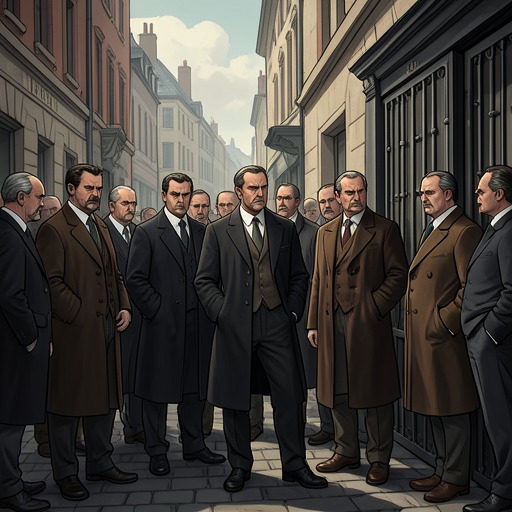
Via dei Materassai
The Florios of SicilyVia dei Materassai is the Palermo street where the Florios’ rise takes material form: a cramped shop gives way to wholesale storage, a modernized storefront, and offices that remain the family’s working and domestic center across decades of commercial growth and political upheaval. The street’s changing rooms and thresholds make business, family memory, and public reputation part of the same landscape.
Commercial beginnings and expansion
When Paolo Florio and Ignazio Florio began wholesaling to other merchants, their spice store could no longer hold the stock. They rented a warehouse on Via dei Materassai, in Palermo’s Castellammare district, to store goods arriving from around the Mediterranean. The move marked a change in scale: the brothers were no longer serving only customers at a counter but supplying fellow merchants as well.
The trade depended on long and costly commodity routes. Spices passed through many hands, traveled overland and by sea, and reached European ports from distant sources. By the early nineteenth century, British and French colonial shipping had diversified the market and lowered prices; Palermo’s spice sellers were part of a larger contest over imports, transit, storage, and resale. The Florios later kept goods in a further warehouse behind the customs offices on the Palazzo Steri property. There, spices could wait in cool, guarded rooms for onward shipment or sale, while import duties were paid only when goods entered Palermo. The Via dei Materassai premises had become too small for the expanding business.
The Florio name on the street
In February 1803, less than a month after the Paolo Barbaro and Paolo Florio company had ceased to exist, the shop on Via dei Materassai displayed a new counter and jars for herbs and spices. Its shutters had been repainted, and they bore only the name Florio. The alteration made the end of a partnership visible in the street itself: the old shared concern had given way to a business identified solely with the Florios.
The shop’s modest appearance remained part of its public image even as its owners’ standing changed. On a later reopening, onlookers and aristocrats’ servants crowded outside to inspect the little store run by a man from Bagnara. Curiosity mingled with suspicion and envy. Ignazio had kept one object from the old shop, his brother’s weighing scales, which reminded him of his origins. Inside, he regarded the reopening as the beginning of a new contest with established aromatari, including Canzoneri and Saguto. The Florios could now claim to be merchants, not merely shopkeepers.
The street also brought customers of different kinds to the same counter. A carriage could block its narrow passage while an artisan bought lacquer and red lead inside; at the same time, Ignazio might be serving a noblewoman. The juxtaposition captures the shop’s changing reach: it remained a place of direct retail exchange even as the family’s business extended into wholesale trade and wider Mediterranean networks.
Office, return, and public responsibility
Via dei Materassai later housed the office to which Vincenzo Florio returned after secretly making his way back to Palermo. He had disembarked nearby, met his secretary Giovanni Caruso and a small escort, then traveled through the countryside while guards were bribed. The city bore the marks of devastation, and its inhabitants believed that aristocrats and merchants had sacrificed the island’s independence to protect their wealth. Vincenzo’s return to the office therefore placed his commercial life inside the political aftermath rather than apart from it.
His public duties and private business met there. He explained that his scheduled days at the cash desk coincided with the departure dates of his steamships and boats, a defense that also sounded like a partial admission. Later, he returned to the street in time to accompany his family to church and meet traders who did business with him. The same address served as a point of passage between the household and the commercial world, while the ships’ timetables pressed on his ability to meet civic obligations.
By 1861, the family’s work had acquired national visibility. In the office of the new National Bank, Vincenzo was president of the Palermo branch and his son Ignazio worked alongside him. They discussed exports of Florio Marsala, which had won a medal at the Florence Exhibition and was popular as an after-dinner wine in Italy and regarded as a luxury in France. Ignazio, appointed manager of the cellars, proposed setting aside a special reserve for the next world exhibition. The office on Via dei Materassai connected the family’s local base to a broader commercial and institutional future.
Family rooms and the passage of time
The address was not only an office and storefront. In the evening, after the account books had been closed and the offices emptied, Vincenzo went upstairs to the apartment. His mother, Giuseppina Saffiotti Florio, was there praying before the copper brazier; he kissed her forehead and asked after her. The domestic rooms stood directly above the business, binding daily family care to the labor below.
Shortly after Christmas 1865, Ignazio walked through the rooms with dust and mud on his shoes. Gas lamps he had installed reflected from the floor. He had suggested buying a new house because the existing one had small, dark rooms that did not match what the family had become. Vincenzo told him to find one and report back. The permission was an act of trust, and it also showed that the old premises, long adequate as the setting for the family’s ascent, now seemed unable to contain its scale or status.
The house on Via dei Materassai nevertheless remained the setting for a final image of family and separation. Giulia crossed the salon and entered her mother-in-law’s apartment, now refurbished for her and Vincenzo, then climbed to the terrace that Vincenzo had built. From the roof, Palermo lay between mountains and sea; she and Vincenzo were alone. The street’s rooms and upper spaces had accumulated the family’s work, domestic attachments, and losses, while the view from the terrace opened onto a city that had witnessed their fortunes change.